Land Disposition Strategy & Solicitation and Transaction Support for Mecklenburg County

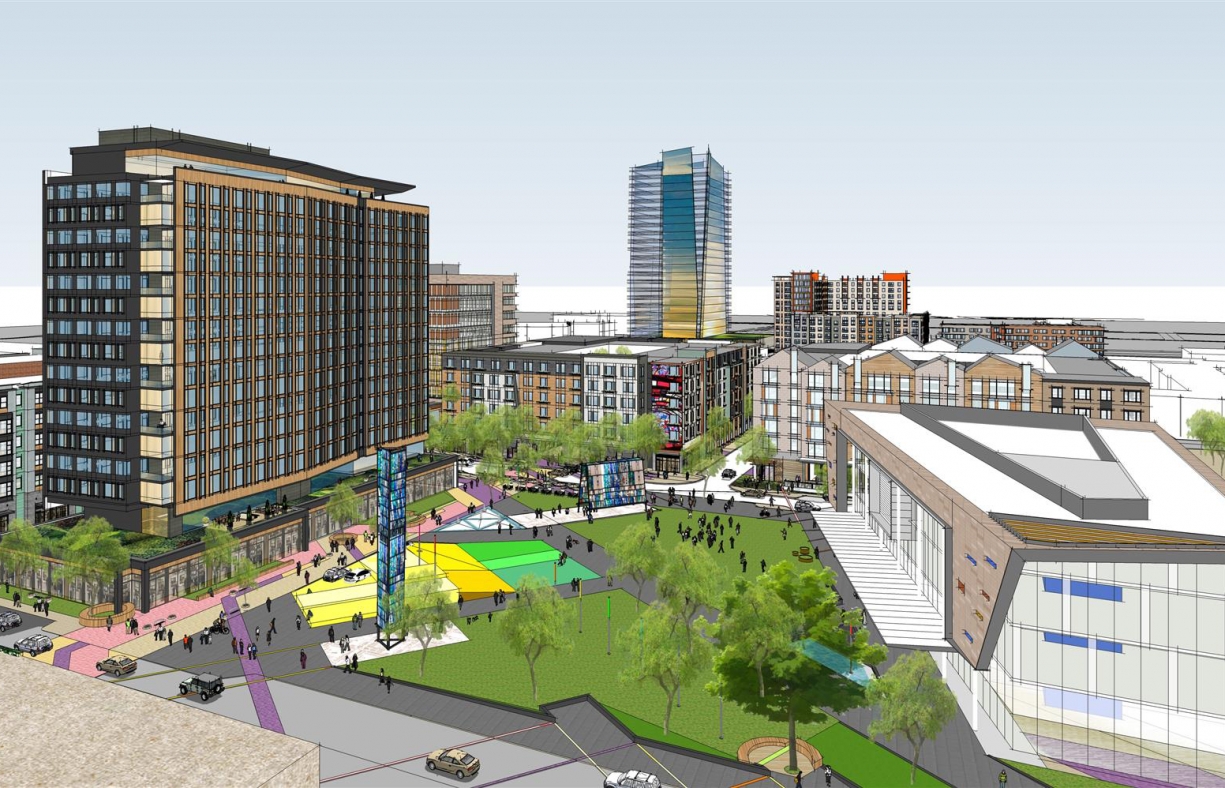
Mecklenburg County successfully secured a master redevelopment agreement to transform underutilized county-owned sites into vibrant mixed-use development.

CHALLENGE

In 2015, Mecklenburg County owned a set of valuable sites with significant redevelopment potential in Charlotte’s growing Uptown, but lacked a clear path to realizing policy goals on the sites, including the generation of revenue and delivery of open space, affordable housing, and new infrastructure. The County required analytical support and strategic guidance to understand the market and surrounding development climate, and move toward a plan for action around each of the sites.
 

Solution

HR&A led the County through a land disposition strategy planning process, providing recommendations for site disposition sequence and strategies that would attract a strong response from the real estate development community. Core work during this stage included: identifying the highest and best use program for each site, testing program alternatives to understand the impact of incorporating policy priorities included affordable housing and infrastructure improvement within each site, developing a valuation for each site and estimating the associated fiscal impacts to the County, and evaluating options for disposition timing and solicitation processes.
 
The County elected to move forward on disposition for two sites in the Second Ward. HR&A supported the drafting, marketing, and release of a Request for Qualifications and subsequent Request for Proposals for Brooklyn Village and Walton Plaza. Our team ensured that the development community was aware of the opportunity associated with these sites and that solicitation documents clearly conveyed the County’s goals for a public private partnership to deliver a significant new mixed-use program and key public benefits, including open space, affordable housing, and new infrastructure across 16 acres, which will transform this area of Uptown Charlotte.
 

IMPACT

The County’s solicitations received strong responses from local and national developers. HR&A guided the development of criteria for the County’s evaluation of proposals and performed an independent evaluation of the strengths and weaknesses of each, including a comparison of the economic proposals. Once the County selected a developer, HR&A supported negotiations of key business terms with the preferred development team, BK Partners, a collaboration between local developer Conformity Corporation and the Peebles Corporation. The County and BK Partners executed a term sheet in August 2017, and the Mecklenburg Board of County Commissioners approved a master redevelopment agreement between the County and BK Partners in July 2018.
Imagine Boston 2030

Imagine Boston 2030, the city’s first comprehensive plan in 50 years, sets the agenda for future growth, investment, and development.

A historic, land-constrained city with a highly productive workforce and a fast-growing population, Boston’s greatest challenge is one that many growing cities are facing—how can it keep housing affordable, invest in infrastructure, and expand access to opportunity as it grows?
 
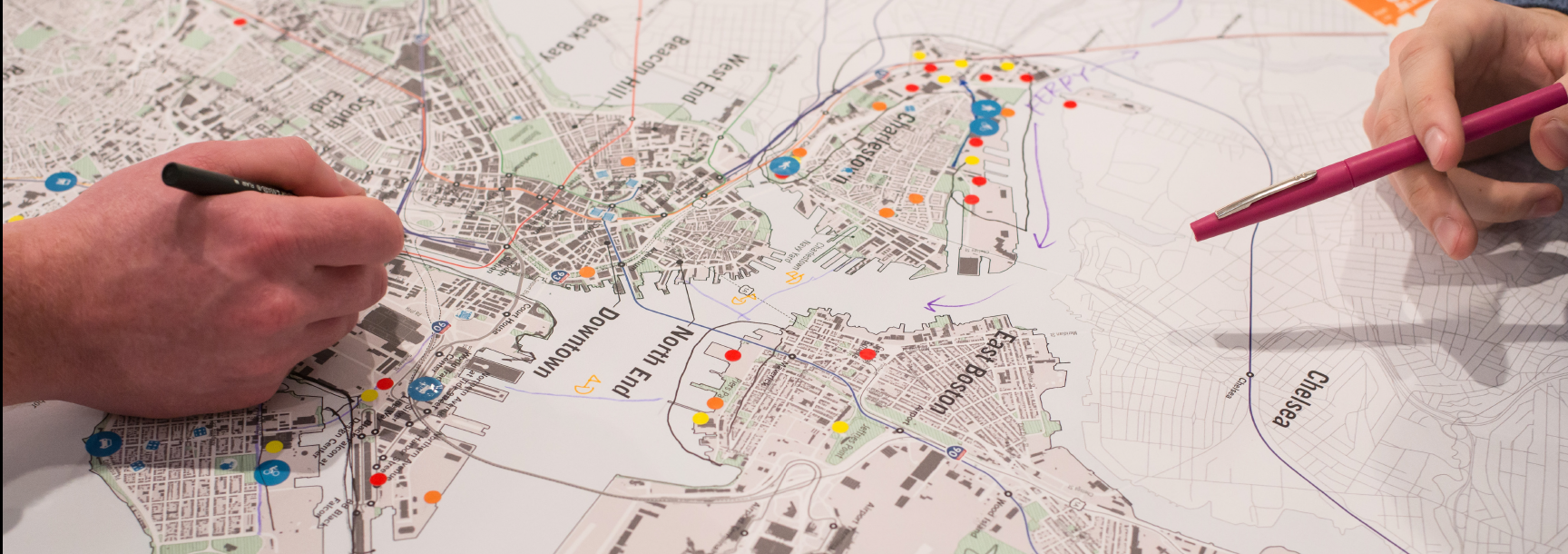
Imagine Boston 2030 is a plan to strengthen the city’s physical assets and encourage equitable economic growth. On behalf of the administration of Mayor Martin J. Walsh, HR&A used economic, demographic, real estate, environmental, and land use analyses, coupled with input from over 14,000 community members, to guide development of an innovative framework that will enhance and preserve Boston’s historic communities while accommodating long-term population and job growth. Working in partnership with Utile Design and supported by Inkhouse Communications, Greenberg Consultants, Hood Design Studio, Michael Van Valkenburgh Associates and Nelson Nygaard – HR&A estimated the housing and working space needed to accommodate growth and developed a strategy that leverages the City’s physical assets, human capital, and regulatory and financial tools to achieve the City’s goals of affordability, inclusive growth, preparing for climate change, and investing in quality of life improvements.
 
Through our analysis, we identified three areas requiring customized approaches to growth, enhancement, and preservation—existing neighborhoods, the commercial core, and edge areas. HR&A helped the City to build consensus on a set of initiatives that combined this place-based planning with new policies —ranging from carbon neutrality to anti-displacement measures —to advance the plan’s underlying goals. By combining planning and capital investment with policy, Imagine Boston 2030 will enable the City to firmly guide development of new housing and investment in areas with the ability to support sustainable growth, while ensuring that the benefits of that growth are accessible to more Bostonians.
 
The final Imagine Boston 2030 plan articulates how the initiatives and priority actions will be funded, led, and measured to ensure success—directly informing the City’s five-year capital plan. Concurrent plans like Climate Ready Boston, Go Boston 2030, and 100 Resilient Cities are other important avenues of progress for the plan’s goals, providing complementary strategies that build off Imagine Boston.

Menil Collection Neighborhood Preservation and Development

Since 2012, HR&A has supported the Menil Collection in realizing its vision for a “neighborhood of art” in Houston’s urban core.

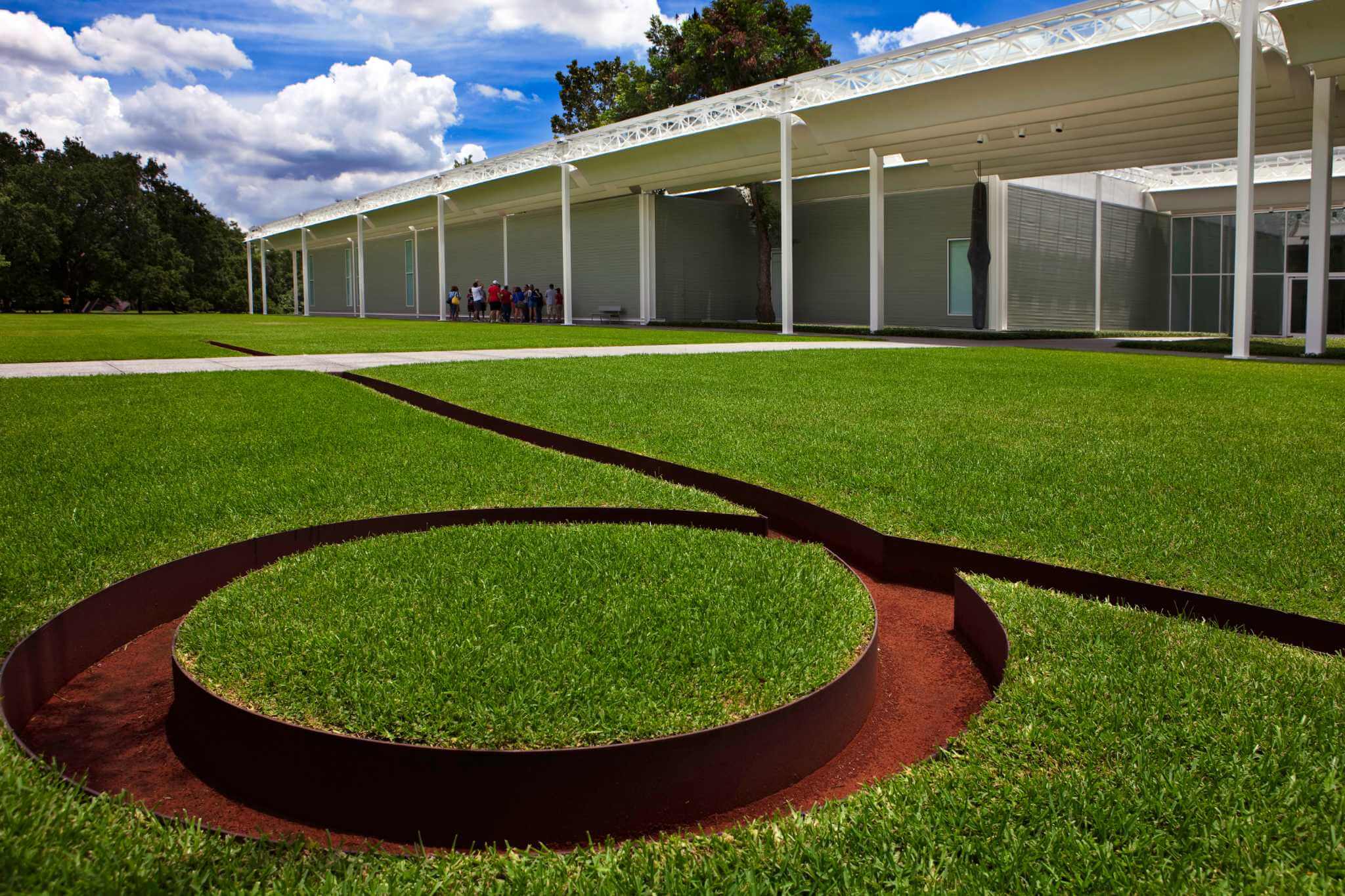
Founded by John and Dominique de Menil in the Montrose neighborhood of Houston, the 30-acre campus currently hosts four museum buildings that display modern exhibitions and select works from the Menil’s private collection of over 17,000 works of modern, contemporary, and African, Pacific Islands, and Pacific Northwest art, as well as two neighborhood parks.

HR&A was pleased to serve as a strategic advisor to the Menil Foundation to guide the organization through the development of a real estate and implementation strategy; provide solicitation and transaction support; and help secure economic development incentives from the City of Houston.  The Menil engaged HR&A at the onset of its planning effort for a fifth museum building – the Menil Drawing Institute – and a new adjoining park, to prepare for the mission, financial, and managerial implications of the expansion.

HR&A advised the Menil through a series of strategic decisions regarding the density, program and phasing of new real estate development on its campus, ultimately supporting the Menil through a real estate solicitation for the first phases of new development. HR&A also crafted a neighborhood property business plan that would ensure the restoration of the unique aesthetic form and fabric of the Menil neighborhood, which is characterized by dozens of historic Arts-and-Crafts style bungalows and a network of open spaces.

Images Courtesy of: The Menil Foundation

Anacostia Waterfront Initiative

HR&A guided the work of six nationally renowned planning firms to create the Anacostia Waterfront Framework Plan. We also led the planning and implementation work for the Anacostia Waterfront’s newest district: Capitol Riverfront.

On behalf of the District of Columbia’s Office of City Planning, in partnership with city and federal agencies HR&A worked with urban design teams to create a development framework for a ten mile stretch along the Anacostia Waterfront. Our work included analyzing the opportunities and challenges for development, performing economic analyses to demonstrate the viability of the Framework Plan, building consensus for the vision among numerous public agencies, and coordinating substantial public outreach efforts.

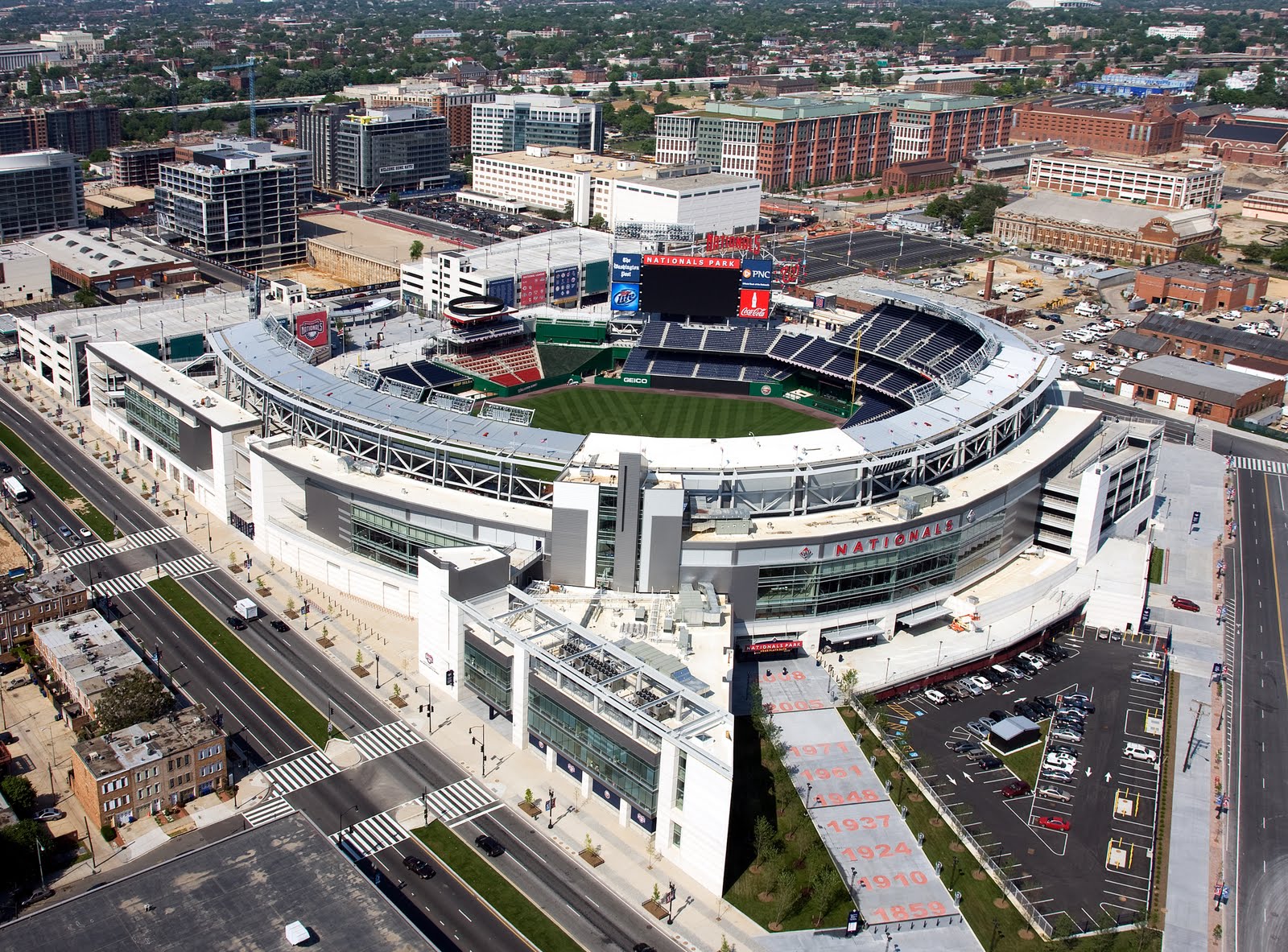
The Capitol Riverfront is one of the District of Columbia’s most successful neighborhood transformation efforts in the last decade. This 350-acre neighborhood surrounding the Washington Navy Yard has attracted more than 12 million SF of mixed-use development and more than $3.3 billion in public and private development that is completed or currently under construction. There are currently 4,000 residents in market-rate and affordable housing living in the Capitol Riverfront, a daytime population of 35,000 workers, and new waterfront parks. The Capitol Riverfront BID estimates that 2.6 million people attended events at Nationals Park, the Navy Museum, and the Yards Park during 2012.


HR&A was the real estate and public policy advisor for the planning and development of the waterfront district surrounding the Nationals Ballpark, now known as the Capitol Riverfront.

  • Managed an urban design team to create a master plan for the Capitol Riverfront;
  • Prepared a development framework for The Yards, Forest City Washington’s ongoing development at the Southeast Federal Center site, immediately adjacent to the Ballpark;
  • Conducted a feasibility analysis of the development plans and identified the preferred alternative;
  • Supported the District of Columbia in creating a new Tax Increment Finance (TIF) district around the Nationals Ballpark, which provided $1.8 billion in financing for the completion of the Ballpark in 2008, further investment in public infrastructure, and a community benefits fund for neighborhood revitalization; and
  • Managed a developer solicitation process.

 
The Anacostia Waterfront Framework Plan won an AIA Honor Award for Regional and Urban Design in 2005. According to the Washington, D.C. Mayor’s Office, the Anacostia Waterfront Initiative has catalyzed over $8 billion in economic development investment to date. In October 2017, the revitalized southwest waterfront opened to the public as The Wharf – a mixed-use development by Hoffman-Madison Waterfront LLC.

Fulton Center Implementation & Retail Strategy

HR&A advised the Metropolitan Transportation Authority on the retail vision for the Fulton Center, its solicitation process for a master retail operator, and a landmark revenue-sharing agreement with Westfield.

As the Metropolitan Transit Authority (MTA) planned to enhance its transportation infrastructure in Lower Manhattan, the agency sought to incorporate retail uses and public space into its development program for a $1.4 billion transit hub. HR&A helped the MTA develop a vision for a flexible retail and commercial environment that promotes a vibrant public realm while creating a dynamic commuting experience for one of New York’s busiest transportation corridors. The resulting development, Fulton Center, connects 300,000 daily commuters to nine subway lines, and provides 50,000 SF of signature, multistory retail and commercial space operated by Westfield, one of the world’s premier retail owners and operators.

HR&A created a strategy to optimize a retail space that would serve a diverse array of shoppers –residents, workers, and tourists – and ensure the retail is in harmony with existing and future retail in the station-area. By first establishing spatial boundaries that accounted for pedestrian circulation needs and transportation functions, we were able to create an exciting space-by-space tenanting strategy that reflected physical feasibility, market potential, and fulfilled gaps in the current retail landscape. We advised the MTA to dedicate the Center’s second-floor to a destination food environment, which would activate the less heavily trafficked space, and fulfill a missing niche in lower Manhattan. To translate this strategy into an operations concept, we partnered the station architect to ensure accommodations for an appropriately-sized back-of-house space, utility provisions, and signage needs.


As of January 2016, Shake Shack, Zaro’s Bakery, and Irving Farm coffee and roasters have all leased spaces in this new food destination. Additionally, co-working startup WeWork signed a 15-year lease for 38,000 square feet in the renovated Corbin Building

Equipped with a well-defined retail vision and strategy, the MTA asked HR&A to manage its solicitation process to identify a master lessee for the management the operations of the retail and public spaces. For this process, HR&A drafted the RFP, engaged developers, structured the pre-proposal conference and site tours, and answered respondent questions. The clearly articulated guidelines of the retail strategy provided confidence to RFP respondents that the space would be functional for tenants, but also ensured that the MTA would procure a retail operator that would adhere to world-class standards. HR&A actively supported the MTA through the proposal review and selection process, as well as negotiations with preferred bidders.


In 2013, after two years of planning and negotiation, the MTA selected the Westfield Group as master lessee, who is responsible for leasing, operating, maintaining, and dedicating private dollars to the upkeep of the retail and public space. In addition to the lessee agreement, HR&A structured an innovative public-private agreement as part of the transaction, in which Westfield and the MTA will share revenue from the retail space and the ad-revenues generated by over 50 digital screens installed throughout the station.

Catalytic Real Estate Development in San Antonio’s Promise Zone

HR&A led a multidisciplinary team to create an inclusive, place-based, and market-guided strategy for economic development in the city’s Promise Zone.

The U.S. Department of Housing and Urban Development designated the Eastside, a 22-square mile economically distressed area, as a Promise Zone in 2014, streamlining access to federal programs that could support neighborhood revitalization. San Antonio for Growth on the Eastside a nonprofit steward of the Promise Zone, also known as SAGE, engaged HR&A through a grant from the U.S. Economic Development Administration to complete an Economic Development Strategy that aligns Eastside investments with neighborhood goals.


The HR&A team, which included Alamo Architects, Moore Icafano Goltsman (MIG), and Infrastructure Design Solutions Engineering (IDS), conducted a series of analyses to deliver a targeted and actionable strategy for economic development on the Eastside.


The team began with extensive outreach to SAGE, its public partners, neighborhood stakeholders, and the broader community to identify the core goals for economic development and opportunities and challenges related to those goals. We then analyzed the existing context of San Antonio’s Eastside to learn about the demographics, physical layout, and strengths and challenges around economic development and reviewed a set of potential policies to advance SAGE goals within this context.


Guided by SAGE’s focus as an economic development organization, we then identified opportunities to realize these policies with new real estate development. We conducted a site analysis of the entire Eastside to identify all vacant, underutilized, and neglected parcels, as well as “prototypical” parcels for which we created illustrative development concepts that reflect both community aspirations and market context.


We then conducted rigorous financial analysis to evaluate the feasibility of each concept. Based on this analysis, we identified existing incentive programs that can support development on the Eastside, as well as new policies that can facilitate a broader range of development uses and locations. Lastly, we developed an organizational implementation strategy to help SAGE prioritize among recommendations and develop the capacity needed to pursue these priorities.


This Strategy lays the blueprint for the next generation of growth on the Eastside, and will form the foundation of SAGE’s work plan in the coming years.

Development Management & Public Financing Strategy for Broadway Station

Broadway Station Partners developed a market-supportable master plan and a public financing strategy to develop one of Denver’s largest and most complex transit-oriented development sites.

CHALLENGE

After acquiring the former Gates Rubber Company plant, Broadway Station Partners wanted to pursue development of one of Denver’s only remaining urban transit-oriented development sites. Located three miles from downtown and directly adjacent to one of the busiest light rail stations in the city, the site could provide much needed housing, office space, and walkable retail in one of the fastest growing cities in America.
 
Though the site’s location and immediate transit access are inherently valuable, environmental contamination and connectivity challenges associated with a freight and light rail line bisecting the former industrial site required significant capital and infrastructure improvements to make development feasible. To navigate the unique site challenges in the planning process, the landowners engaged HR&A to advise on the balance of infrastructure investment and value-generating development to inform the project’s development strategy, master plan, and public finance strategy.

SOLUTION

Working closely with an engineering and planning team, HR&A advised Broadway Station Partners on strategies to unlock and create value by identifying activating uses, infrastructure improvements, and amenities. The team’s assessment of the local real estate market and financial feasibility of different development densities, typologies, and infrastructure programs informed the master plan, which targets infrastructure investments that improve connectivity and placemaking to unlock potential for development density and value.
 
To understand the extent of public financing needed for the substantial infrastructure improvements, HR&A analyzed the potential for value-capture tools to fund infrastructure development. To do this, the team assessed the impact of the development program, phasing, local market, and financing structures among other considerations for potential capital sources – including tax increment financing (TIF) and revenues from the site’s metropolitan district, or special taxing district. This analysis formed the foundation of the landowner’s tax increment financing request, financing plan, and negotiations with local public authorities, ensuring that revenues generated by the site are sufficient to finance required infrastructure and help produce market returns for the landowner in the long-term.
 

IMPACT

The Denver City Council unanimously approved the landowner’s $140 million public infrastructure financing request, including a $90 million tax increment financing package, the second largest approved in the city. Infrastructure development on the site broke ground in 2018.

Penn's Landing

Master Plan for Philadelphia’s Delaware Waterfront & Penn’s Landing

HR&A created development, investment, and phasing strategies to support the award-winning Master Plan for the Central Delaware, and advised on redevelopment scenarios for a revitalized Penn’s Landing.

CHALLENGE

Philadelphia’s waterfront once bustled with industrial activity, but as the City’s manufacturing and shipping sectors shifted to accommodate Center City’s growing knowledge-economy, the isolated waterfront deteriorated. Cut off from downtown by an interstate highway, the waterfront suffered from disinvestment, increased vacancy, and underutilization.

In 2010, the Delaware River Waterfront Corporation, seeking to revitalize a seven-mile length of the central waterfront, asked HR&A and a team of designers, engineers, urban planners, and architects to create a master plan that would create an accessible riverfront, provide community amenities, and increase the values of surrounding parcels to encourage redevelopment along the waterfront.

SOLUTION

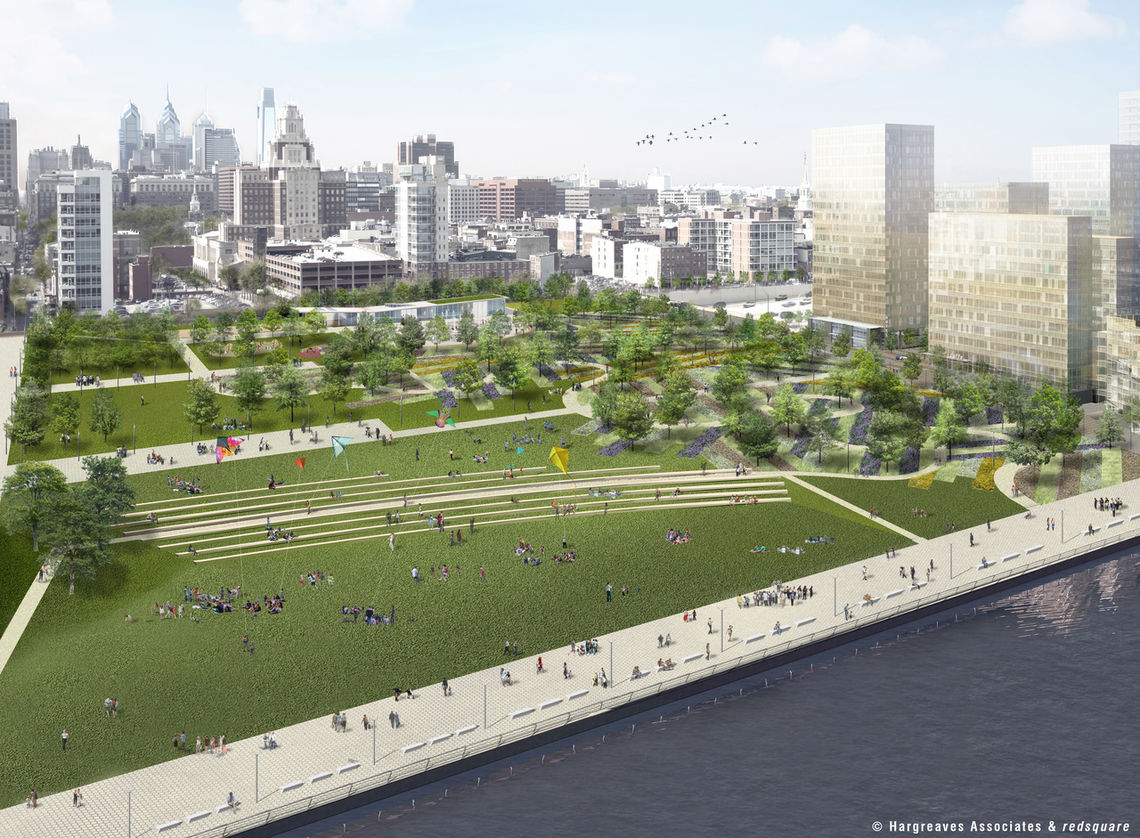
The resulting plan extends Philadelphia’s vibrant urban environment to the water by incorporating neighborhood-scale development, transportation connections, public-realm improvements, entertainment and cultural offerings, and open space and recreation opportunities.
 
HR&A worked with the planning team to identify the initial steps needed to finance and implement these improvements, starting with an assessment of local demand for residential, retail, commercial office, flex, and hotel uses. This assessment helped shape the development program, and informed the planning team’s strategy to extend the low- and mid-rise character of nearby residential neighborhoods, which would create signature waterfront destinations without absorbing a disproportionate share of demand from Center City’s building inventory and businesses. Additionally, HR&A explored phasing, financing, and implementation alternatives that leveraged the site’s private development potential to support essential first-phase public improvements and amenities.
 
In 2014, HR&A joined a team of landscape architects and planners to advance the framework for open space and development at Penn’s Landing, Philadelphia’s premier waterfront event space. As one of the first-phase redevelopment sites identified in the master plan, the site included a range of activating uses including residential, retail, and an 11-acre signature park with neighborhood-scale public spaces that would provide key connections across the I-95 expressway towards Center City. HR&A assessed market demand for new development, and coordinated with the study team to evaluate multiple development scenarios, including associated phasing.
 

IMPACT

 
The Philadelphia City Planning Commission adopted the master plan in 2012, and the Delaware River Waterfront Corporation is now advancing implementation.
 
In 2015, DRWC selected a development partner to construct 550 units of rental housing, 30,000 square feet of retail, and significant public space at Spring Garden. This new development will complement a new entertainment center and nearly 500 additional units of housing now under way on private land surrounding the waterfront, spurred in part by Delaware River Waterfront Corporation advancement of five major infrastructure projects recommended under the master plan.

Martha Jefferson Hospital

Martha Jefferson Hospital

HR&A Partner Shuprotim Bhaumik guided the comprehensive relocation and redevelopment process for the historic Martha Jefferson Hospital.

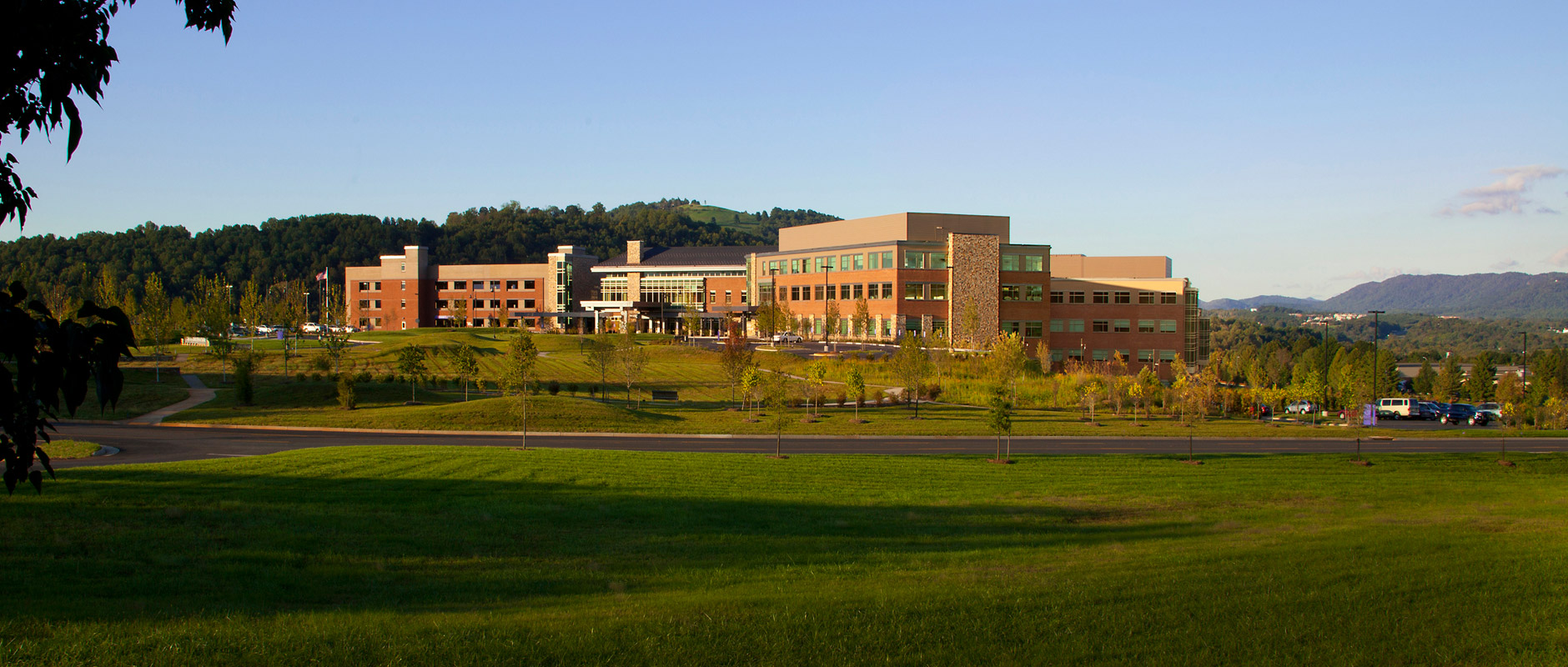
When Martha Jefferson Hospital  was facing the challenges of aging facilities and limited opportunities for expansion, they engaged an Shuprotim Bhaumik  as an advisor to assist them in redeveloping its historic facility in downtown Charlottesville, Virginia. The hospital planned to relocate to newly constructed facilities and wanted to plan for the disposition of the hospital’s historic main building and eight acres of surrounding land. The Hospital engaged Shuprotim to evaluate economic conditions; develop a market-feasible program for the redevelopment of the parcel by a single developer; and lead the developer selection and negotiation process. The hospital later engaged him to create a phased disposition strategy in order to get the strongest private market response.

Under Shuprotim’s leadership, the Hospital created a phased disposition strategy and received several proposals from the development community and ultimately selected a Charlottesville-based developer Octagon Partners to redevelop the historic main building and hospital campus.

Image Courtesy: Kahler Slater

NBCUniversal Economic Analysis

NBC Universal Evolution Plan

HR&A provided detailed economic analysis for NBC Universal’s entertainment and studio complex expansion plan.

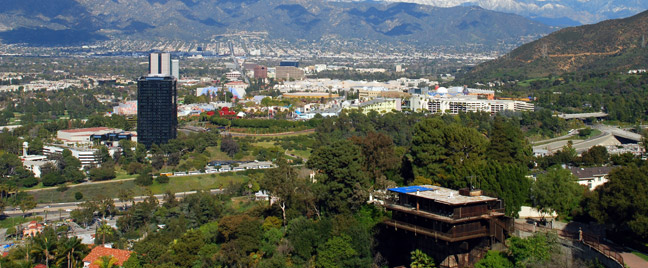
HR&A analyzed population, housing, public school enrollment, employment, economic and fiscal impacts of a proposed $1.6 billion Specific Plan that will increase the intensity of development at Universal City. The project site is the home of NBC Universal’s 400-acre film studio, studio tour, entertainment retail, commercial office and hotel complex. HR&A’s analyses were included in the Environmental Impact Report on the project.

The project is located in an unincorporated area of Los Angeles County, but also includes areas that are in the City of Los Angeles. Some areas may be annexed to or detached from each jurisdiction, which required rigorous attention to measuring impacts by jurisdiction under multiple development scenarios.


All project entitlements, except for the minor jurisdictional annexations/detachments have now been approved by both the City of Los Angeles and the County of Los Angeles.


HR&A also prepared similar impact analyses for the Walt Disney Company’s multi-billion dollar expansion of Disneyland in the City of Anaheim, 20th Century Fox’s expansion of its facilities in Century City, and a new pending master plan for Paramount Pictures Corporation in Hollywood.