
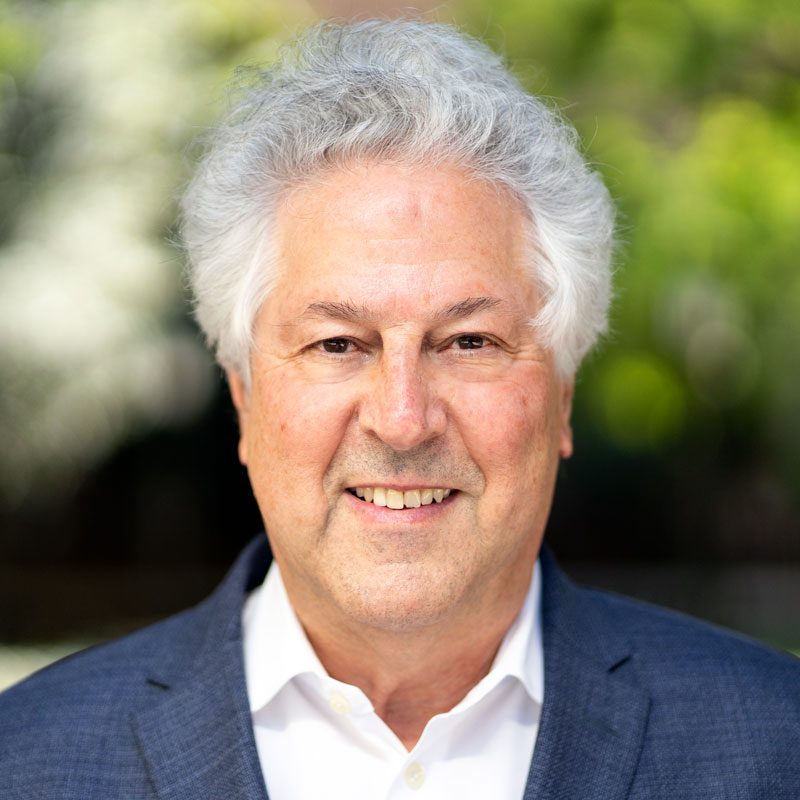
Paul J. Silvern

Paul J. Silvern draws on over 30 years of non-profit, public, and private professional experience, including serving as the Partner in charge of HR&A’s Los Angeles area office between 2007 and 2020, and a member of the firm’s Board of Directors 2007-2022.


In his time with HR&A, he has directed the analysis of major regional airport expansion plans, military base conversions, television and film studio expansions, hotels, office parks, high-rise office buildings, industrial developments, shopping centers, hospital complexes, university campus expansions, urban residential developments, mixed-use developments, and a wide range of planning initiatives. His work includes:

  • A 5.2 million square foot Specific Plan to guide future academic facility, housing and commercial development at the University of Southern California’s University Park campus;
  • Redevelopment of the Hollywood Park Racetrack in Inglewood into a major mixed-use development including 3,000 housing units, regional retail, office and public uses;
  • Two iterations of $3 billion Specific Plans to redevelop the NBC Universal entertainment studio, office, retail, theme park and hotel complex in Los Angeles;
  • The addition of two new theme parks at Disneyland in Anaheim, California;
  • 2.4 million sf hotel, office and retail redevelopment of the Wilshire Grand, the first new high-rise office building to be built in downtown Los Angeles in over 20 years;
  • The Keck Graduate School for Applied Life Sciences, the seventh member of the Consortium of The Claremont Colleges;
  • Reconstruction of Saint John’s Hospital and Health Center in Santa Monica, in the wake of severe building damage caused by the 1994 Northridge earthquake;
  • Three new high-rise office buildings, and a 400-unit high-rise multi-family residential development in Century City, one of the most prestigious commercial office locations in Los Angeles;
  • 10 million square feet of new commercial and residential development around Union Station in the City of Los Angeles;
  • The Red Building (400,000 sf), the final phase of the Pacific Design Center in West Hollywood;
  • The 6.6 million s.f. Coyote Valley Research Park in San Jose, on behalf of a developer and business consortium including Cisco Systems, Inc.; and
  • Master Plans and redevelopment alternatives for Los Angeles International Airport, O’Hare International Airport, and San Diego International Airport.

Paul also has extensive experience in all aspects of housing policy and housing development, ranging from design of municipal regulatory programs to design and administration of affordable housing production programs and real estate advisory work on major private housing developments.

Paul’s clients include major development organizations as well as numerous local governments, redevelopment agencies, institutions and metropolitan planning organizations.

Paul earned a Masters Degree in Architecture and Urban Planning from the University of California, Los Angeles and received a Bachelor of Science in Architectural Studies, with Honors from the University of Illinois, Urbana.

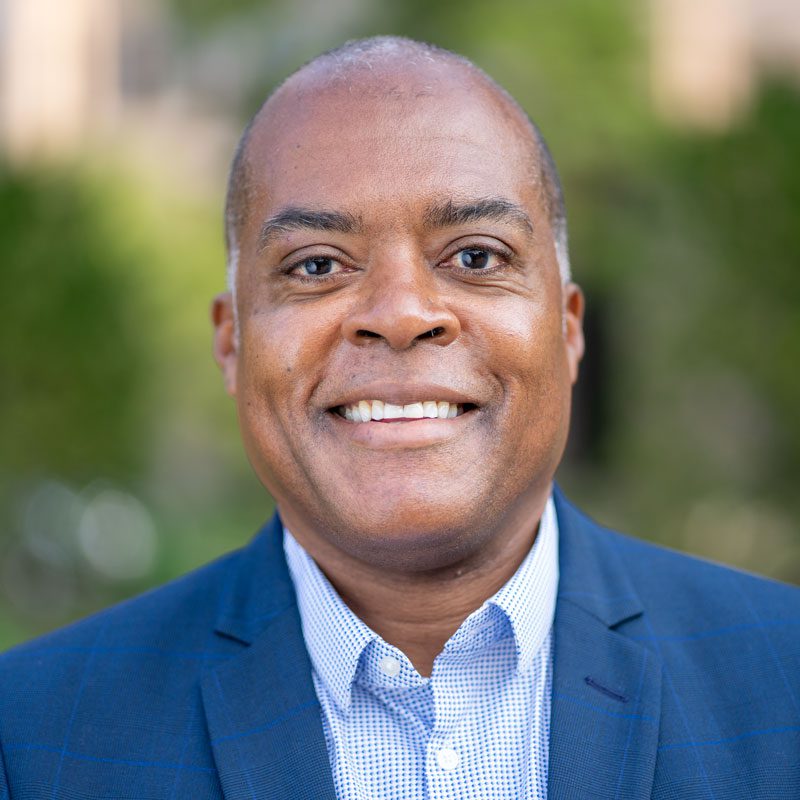
Judith Taylor

Judith’s work merges forward-looking market and economic analyses with the ability to effectively communicate with, and empower, communities to shape equitable and impactful outcomes.


Judith brings 20 years of experience in real estate, land use, and inclusive economic development. Since joining the Los Angeles office in 2013, Judith has focused on advancing public sector goals and unlocking opportunities for public-private partnership, in areas ranging from transit-oriented development to downtown revitalization strategies. Judith pairs technical economic expertise with a deep understanding of community values to lead public and private clients in envisioning and implementing transformational, yet achievable change. She works on a variety of projects to achieve this:

Judith is an industry expert in transit-oriented development that maximizes Her work is underpinned by the notion that TOD is not simply about spurring new uses, but about meeting community needs and opportunities. For the Crenshaw/LAX Light Rail corridor, Judy supported the development of design guidelines for mixed-use TOD in several of the city’s historic middle-class Black neighborhoods through a robust, publicly-informed design process that allowed residents to set the agenda for the development they wanted. For the proposed West Santa Ana Branch Light Rail, she developed an implementation toolkit that provides 14 under-resourced communities in Southeast Los Angeles with policy tools to support housing protections, and wealth building opportunities while attracting new development.

Combining expertise in real estate and economics, Judith specializes in developing revitalization and equitable economic development strategies for both cities and industry. She has supported development of the citywide economic development strategy for Los Angeles, downtown plans for Bakersfield, Montclair, Cathedral City, and corridor and neighborhood strategies for many more. Judith also has a focus in the role of “green jobs” in economic development. She led a green jobs study for the Los Angeles Cleantech Incubator (LACI), analyzing the opportunities in the sector for diverse communities and offering recommendations on how to more inclusively grow the green sector. She also supported LACI in developing a multi-year regional partnership to accelerate transportation electrification and zero emissions goods movement in California.

Judith has experience informing community benefits strategies, identifying opportunities to capture the value generated from development to support local needs and close the racial wealth gap. Judith has led the community benefits strategy for the City of San Jose as it looks to develop the station around Diridon Station. Across a four year period, Judith advised the City of San Jose’s community benefits negotiations with Google on the proposed Downtown West, an 8 million square feet mixed-use campus around Diridon Station, with a focus on the depth of affordable housing, displacement prevention, and workforce training.  The Development Agreement was recently approved with more than $200 million in community benefits and a $150 million community-controlled fund.

Judith understands the need to assess and develop strategies to mitigate current inequities, in order to build cities where all people have equal opportunity. Her work has spanned conducting a displacement impact study for the City of Hayward, California to make the case for additional affordable housing investment, to creating an economic development plan for Richmond, California to support an inclusive COVID-19 recovery. Moreover, she has advised numerous institutions on achieving their equity goals. For the Urban Land Institute, she led analysis of how the real estate sector can better contribute to goals around social equity and health, and advised the Knight Foundation on how to stimulate long-term economic and cultural activity through “The Arthouse,” a mission-driven culinary incubator in Gary, Indiana.

Prior to joining HR&A, Judith served as Director of Real Estate and Economic Planning at Pro Forma Advisors and as Senior Associate with Economics Research Associates. Judith holds a Bachelor of Arts in Economics from Stanford University and a Masters in Public Policy and Urban Planning from the Harvard Kennedy School. Judith enjoys biking, gardening, and visiting Los Angeles’ parks and beaches with her family.

Stan Wall, P.E.

Stan Wall brings 20 years of public-private real estate experience in the Washington Metro Area market.


Stan Wall joined HR&A as a Partner in our Washington D.C. office in August 2015 after holding several senior positions in the mid-Atlantic region. In his previous posts, Stan worked across the entire real estate project lifecycle including strategy, planning, finance, development, and construction.

Prior to joining HR&A, Stan was the Director of Real Estate and Station Planning at the Washington Metropolitan Area Transit Authority (WMATA), the second busiest transit system in the United States. In this role, he reinvigorated the agency’s transit oriented development (TOD) program by helping them leverage their transit infrastructure to support housing and economic development. In the past three years, Stan helped to secure Board approval to pursue 16 new TOD projects. Eight of the 16 approved locations are now in the negotiation and/or solicitation stages; four more are in the final stages of pre-solicitation planning; and the remaining four are in the early planning stages. As these projects are implemented in the next 3-4 years, they will begin to yield significant financial and ridership benefits for the agency.

Stan also helped to enhance WMATA’s relationship with local jurisdictions, which in turn served to ensure a responsiveness to the local communities and to present a consistent, unified message to interested developers. Through these efforts, coupled with a refinement to the agency’s development policies and procedures, WMATA became known as a better business partner to the development community. This extended beyond TOD solicitations to include an increased responsive to developer inquiries in all other aspects of the office such as permits, easements, and other information requests.

Stan is also owner and founder of Wall Development Group, a Washington, D.C. based development firm focused on sustainable development, urban infill, and community-oriented projects. With Wall Development, Stan led a multi-disciplinary team to advise the District of Columbia on a development strategy for the Poplar Point Redevelopment project – a 110-acre site directly across the Anacostia River from the Nationals stadium and the Capitol Riverfront area. The site presented tremendous planning challenges including mitigation/restoration of existing wetlands, elevating the property out of the floodplain, relocation of Federal facilities, creation of a 70-acre park space, and construction of significant infrastructure to better connect the site to the surrounding established neighborhoods. Stan’s team of consultants advised the District across all of these areas and created a development strategy to advance the project forward.

Previously Stan worked with Arup, an international firm of designers, planners, engineers, consultants and technical specialists with a focus on innovative projects in Washington D.C. While at Arup, he assisted the firm in the creation of a new business initiative focused on assisting owners and investors of real estate portfolios create value through sustainability initiatives.

Stan also worked for a number of years at Jones Lang LaSalle (JLL) in Washington D.C. as a Vice President in the firm’s public institutions practice. While at JLL, he assisted public sector clients in maximizing the strategic and financial value of their real estate assets through public-private initiatives. Clients included: the U.S. General Services Administration, the U.S. Department of Veterans Affairs, the District of Columbia, Prince George’s County, Maryland; and the Washington Metropolitan Area Transit Authority. Prior to Jones Lang LaSalle, Stan was a Manager with Deloitte Consulting, where he provided strategic advisory services to Fortune 500 companies in the areas of real estate, construction, and capital program management.

Stan is a registered Professional Engineer and began his career in Lend Lease’s construction management group, where he was an on-site project engineer focusing on healthcare projects in the Washington-Baltimore region.

Stan received a Master of Business Administration in Finance and Real Estate from the Wharton School at the University of Pennsylvania and a Bachelor of Arts in Architectural Engineering from Pennsylvania State University. In 2013, the Washington Business Journal recognized Stan as one of the region’s Minority Business Leader Award winners.