Los Angeles County Rent Stabilization Ordinance Study

Amid high inflation, rising costs, and the ongoing recovery from the COVID-19 pandemic, HR&A collaborated with Los Angeles County to address the critical issue of rental housing costs by developing six potential rent increase formulas for the County Board of Supervisors’ consideration. These options integrated real-world scenarios and input from renters and owners alike, aiming to address market realities, mitigate overburdensome costs, and support the needs of all parties in the rental market.

Nearly all low- and moderate-income renters in unincorporated Los Angeles County are housing cost-burdened, which means they spend more than 30% of their income on rent. Consequently, any rent increase will exacerbate housing instability for these renters and could potentially lead to evictions.


HR&A was proud to support the County Board of Supervisors in exploring and refining its approach to stabilizing rents and protecting tenants. As part of this work we engaged with diverse stakeholders, including tenants, advocates, and property owners, to ensure that our analysis reflected the real-world experiences and challenges of impacted groups. Our engagement supplemented analyses of rental market trends, operating costs, ongoing pandemic impacts, and the policy environment for rent stabilization in California. Based on this work, we developed six potential rent increase formulas for the Board’s consideration, and carefully evaluated each for its impact on all parties involved.


Our analysis and recommendations empowered the County to make an informed decision on changes to their Rent Stabilization and Tenant Protections Ordinance, with the goal of reducing housing instability and prevent evictions, while also considering the needs of landlords. This work not only supports the County’s vision for more equitable affordable housing access but also helps address a pressing community need with housing prices continuing to rise across the State.

Supporting SEIU State Public Banking Legislation

HR&A Advisors worked with a coalition of racial and economic justice organizations, financial access advocates, and labor unions, including the California Service Employees International Union (SEIU) and the California Public Banking Alliance, to provide analysis of the financial and social impacts of unfair banking access to support advocacy for the California Public Banking Option Act (AB-1177). Our findings showed how inadequate and disparate access to free and safe banking accounts results in billions of dollars lost to the California economy annually, contributes to people remaining in poverty, and increases the use of taxpayer dollars towards providing social services.  

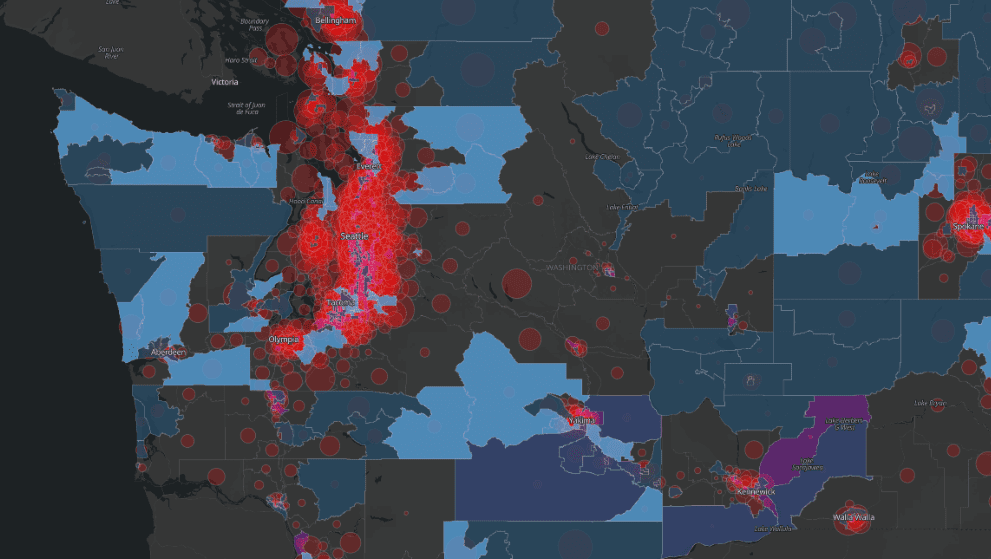
In October 2021, the California Assembly and Senate passed the California Public Banking Option Act and Governor Gavin Newsom signed it into law in a move that sets the foundation for providing universal access to banking that will benefit households, local economies, and taxpayers. This is the first bill in the nation guaranteeing universal banking access, paving the way towards giving all Californians access to high-quality, low-cost financial services. 80.7% of unbanked Californians earn less than $15 per hour, and nearly half of Black and 41.1% of Hispanic households in California are unbanked or underbanked. Unbanked communities lack access to basic financial services — like checking and savings accounts — that are critical to financial stability.  


HR&A Advisors novel analysis examined who is not being served by the formal banking system, where they live, what the financial costs are to individuals and to the economy of un- and under-banking, and the economic benefits of the legislation to California. AB-1177 established a framework to study the feasibility and implement the CalAccount public banking option program, an alternative to the high fees that many Californians face from existing predatory banking options that stand as a barrier to wealth accumulation. 


Our analysis delineated how the CalAccount program could offer critical services to Californians and become self-sufficient within the next five years. CalAccount could draw on existing state programs to reach a customer base of millions of Californians resulting in an estimated $3.3 billion in savings for low-income households, potentially creating 22,000 jobs, and boosting the California economy by an estimated $4.2 billion by redirecting spending away from costly interest and fees.   


Photo: Louis Velazquez

FLOW Youth Center

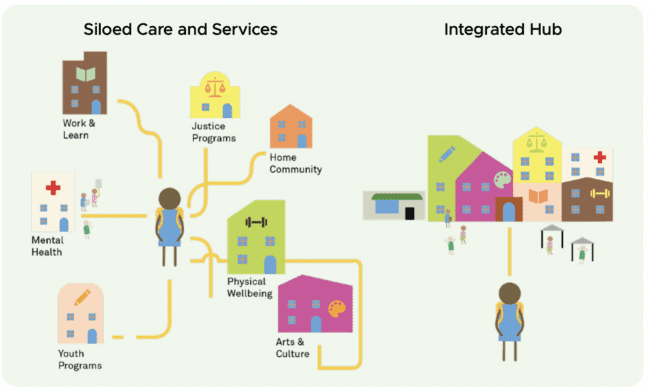
HR&A has been working with a coalition of advocacy groups including JusticeLA (JLA) and Designing Justice+Designing Spaces (DJDS) in their efforts to advance projects around L.A. County’s transformative Care First Community Investment (CFCI). JusticeLA is a collaborative of several L.A. based organizations organizing with communities to disrupt where and how L.A. County incarcerates justice-involved individuals. DJDS is the nation’s foremost design nonprofit working to build and transform communities through restorative Justice. DJDS will steward an authentic, ground up engagement effort with community to design, build and operate new infrastructure that challenges the traditional paradigm around justice and incarceration. HR&A developed a concept plan for a pilot campus in Long Beach that builds on DJDS’s argument: that community-based solutions including mental health, substance abuse treatment, jail diversion, and quality design can disrupt the revolving door for justice-involved individuals.  In 2022, DJDS, JLA, and HR&A released a concept paper, proposing the development of a piece of the FLOW (For the Love of Well-being) Youth Center.

The FLOW Youth Center will be a new prototype for juvenile restorative justice, designed to break the cycle of investing in punishment by reinvesting in spaces and programs focused on care and healing. The Center will proactively address the root causes of youth incarceration and the lack of physical infrastructure and associated programming for holistic health services, education, and employment. Our concept paper describes an innovative and replicable process for radically inclusive, equitable, community-engaged design for restorative justice.


HR&A worked with JLA and DJDS to develop a robust engagement strategy and the estimated time and budget to complete the work outlined within the concept plan. With this concept paper as a guide for development, DJDS is currently looking for partners in government and philanthropy to invest in their concept development fund and inspire grass roots efforts to design and build these centers throughout Los Angeles and the country. We look forward to continuing this partnership as DJDS and JusticeLA work with communities to transform the built environment and L.A.’s criminal justice system.

Richmond Business Recovery Action Plan

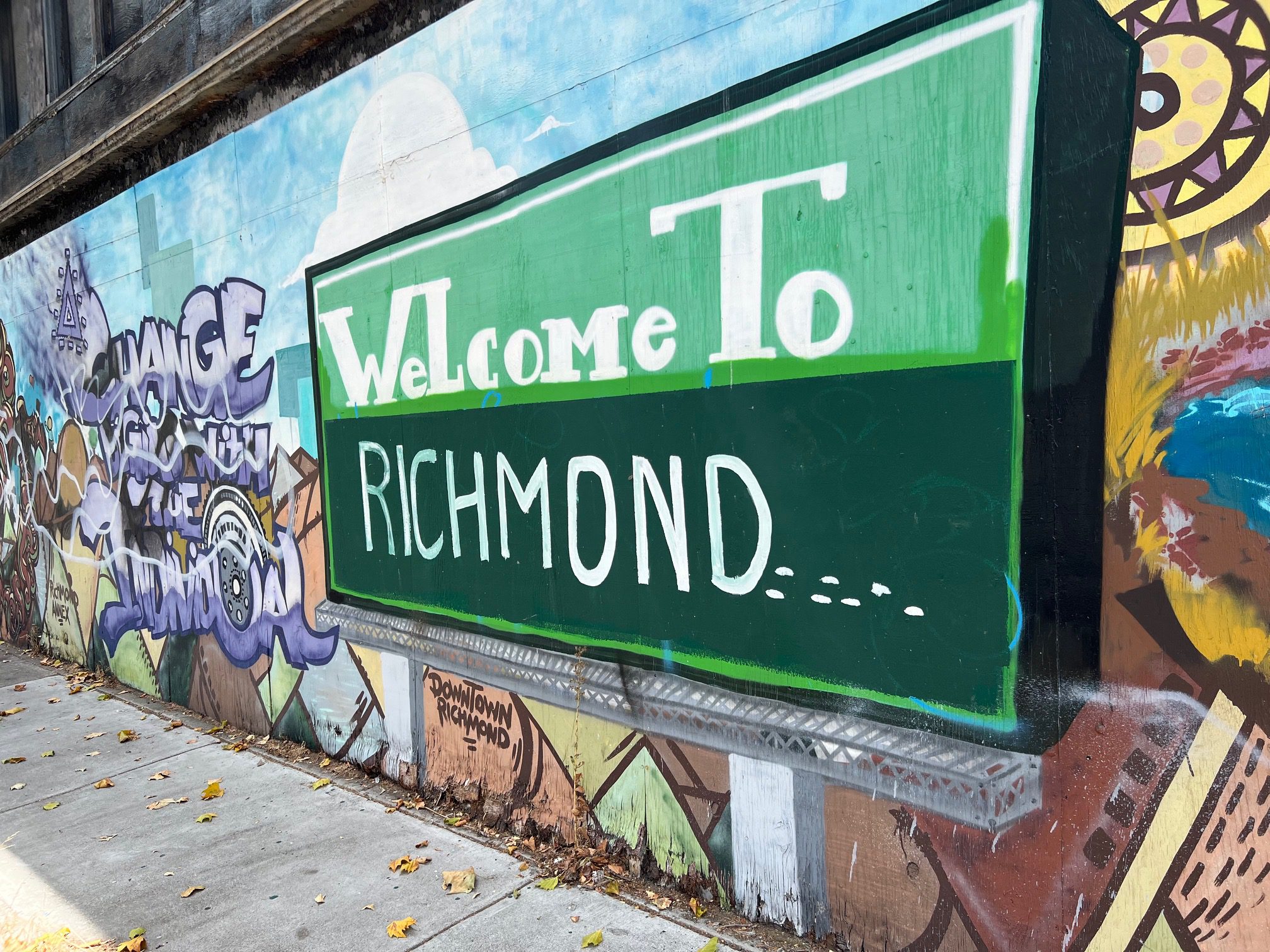
HR&A collaborated with the City of Richmond to develop inclusive recovery principles and a comprehensive Business Recovery Action Plan targeting small and locally-owned businesses. Our approach identified critical recovery needs, streamlined access to resources, and established actionable strategies that the City continues to implement, including expanded grant programs and improved service delivery for underserved business owners.

Richmond’s small businesses needed targeted support during economic recovery, particularly businesses owned by people of color who were reluctant to take on additional debt in an uncertain environment after the pandemic. HR&A conducted comprehensive analysis of recovery needs and available resources, developing actionable recommendations that expanded grant programs and removed barriers to accessing City services. We identified opportunities to leverage federal recovery dollars for workforce development while emphasizing solutions that could advance meaningfully within six months and align with principles of equitable recovery.


The resulting Business Recovery Action Plan prioritized achievable six-month milestones aligned with equity principles, leading to tangible outcomes including the establishment of a new Economic Development Working Group and development of buy-local initiatives. HR&A supported the City with implementing the plan through multi-stakeholder facilitation and then developed a long-term business investment and attraction strategy. The City’s ongoing commitment to underserved residents led to HR&A’s subsequent retention for community-centered allocation of American Rescue Plan Act funds, demonstrating the sustained impact of our collaborative approach to inclusive economic recovery.


Explore:

Business Recovery Action Plan

SDSU Mission Valley Innovation District Development

Universities across the country are taking on new roles to increase opportunity for their students, faculty, and surrounding communities by creating inclusive spaces for innovation.

San Diego State University (SDSU) made the bold move to purchase a 135-acre site from the City of San Diego to create SDSU Mission Valley, a mixed-use, transit-oriented community that will help expand SDSU’s educational, research, and entrepreneurial missions. This site will include a 1.6 million square foot Innovation District, up to 4,600 residential units, a multi-use stadium, and over 80 acres of parks and open space. The entire project will increase career opportunities for SDSU’s 35,000 students, 54% of whom are students of color, and grow SDSU’s $5.7 billion annual impact on the San Diego region.


Quidel Corporation, a provider of rapid diagnostic testing solutions, cellular-based virology assays and molecular diagnostic systems, was announced in July of 2022 as the first partner in the Innovation District and a Founding Partner at SDSU’s Snapdragon Stadium. SDSU expects more private, public and non-profit-sector partners to be announced in the coming months, who will contribute to interdisciplinary hubs of research and innovation.


We collaborated with SDSU to refine a vision and business plan for the Innovation District and to guide refinement of a master plan for the district. We are currently supporting the procurement of a developer to construct as much as 500,000 square feet of space within the Innovation District, where SDSU will expand its research presence to anchor the new development.


SDSU Innovation District Quad and Public Realm, Image courtesy of SDSU.

Minimum standards for JPA-sponsored, California Middle Income Housing Conversion Transactions

The housing supply crisis in California is being addressed through a wide range of critical yet complex public and private investments. But very few resources support new housing for middle-income households.

In the last two years, three California Joint Powers Authorities (“JPA”) and their developer partners, with approval from local governments, have originated more than $5 billion of tax-exempt bonds paired with property tax exemptions to finance acquisition of 9,000 apartments, which will be converted into affordable rentals for middle-income households. The total financing exceeds the current $3.7 billion annual allocations of Low-Income Housing Tax Credits for low- and very low-income households in California.


Our work with local governments across the state has been focused on ensuring that these investments maximize public benefits and meet local policy objectives. Our project evaluations help guide negotiations for this new type of transaction and illuminate the issues that local governments in California should consider before approving participation in these transactions.


A white paper, co-authored with the California Housing Partnership and CSG Advisors, guides our analysis approach and highlights the urgent need for local governments to carefully weigh the merits of middle-income housing JPA bond transaction proposals. As a result of this work, Assembly Member Ward proposed AB 1850 to establish minimum standards for JPA-sponsored middle-income conversion transactions.


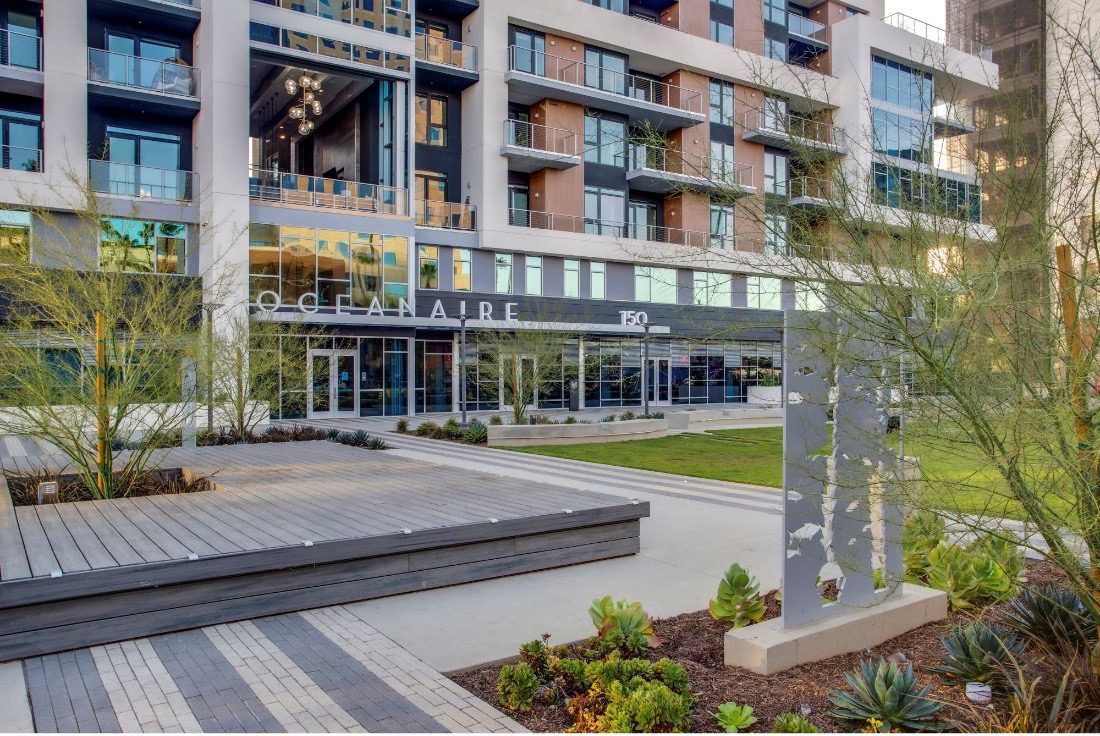
Project evaluation examples include two for City of Long Beach, where we helped negotiate better terms for a 215-unit building conversion, the Oceanaire and new construction of a 580 units, the Midblock Civic Center.


Image courtesy of Oceanaire

Los Angeles County Development Authority Loan Program

Since 1999, HR&A has helped the LA County Development Authority refine and administer its annual affordable housing developer Notice of Funding Availability (“NOFA”) loan programs. HR&A has provided financing reviews, loan underwriting, and project coordination, and other advisory services that have contributed to over 100 affordable housing developments across the county, including nearly 1,000 new affordable homes since 2021. 


For the last two decades, we have served as LA County Development Authority’s (LACDA) technical partner in executing their NOFA loan programs — reviewing and scoring dozens of detailed competitive developer proposals, conducting due diligence reviews, assisting applicants and County staff to finalize deal structures, drafting complex loan documents, providing project financing review, conducting loan evaluations, assisting with loan underwriting, coordinating with counterparties, calculating back-end tax liability, analyzing proposed loan modifications and re-syndications, and training staff. In addition to this work, HR&A served as the Los Angeles County Department of Mental Health (DMH)’s primary consultant for the Mental Health Services Act (MHSA) Housing Program from 2007 – 2019 to deploy the County’s $116 million share of the MHSA Housing program, which provides capital and operating subsidy loans for service-enriched, permanent supportive housing for homeless Angelenos.  


Through HR&A’s work for the LACDA, more than 100 projects have received funding from its programs, which has been critical to securing federal low-income tax credits needed for total project financing. The County programs HR&A has helped support offer new permanent supportive affordable housing, targeted to a range of populations — including seniors, families, and transitional-age youth. 


Explore 

Learn more about the NOFA loan program on LACDA’s website 


Press 

New Boyle Heights affordable housing La Veranda provides a permanent home Calonews

Joint Development Guidelines for Crenshaw/LAX Light Rail Corridor

LA Metro is supporting the economic and physical development of Los Angeles communities through its Transit-Oriented Communities Program.

CHALLENGE

In 2008, Los Angeles County voters showed their overwhelming support for Measure R, which solidified a groundbreaking plan to double the length of the commuter rail system by 2035. To ensure that this major investment in the rail network produces wide-ranging benefits in the communities that it serves, the Los Angeles County Metropolitan Transportation Authority (Metro) launched the Transit-Oriented Communities Demonstration Program, a comprehensive approach to facilitating joint-development on the land it owns around transit stations.
 
As part of the program’s implementation, Metro engaged HR&A to support the development of program and design guidelines that incorporate broad community objectives – like community development, economic development, and multi-modal mobility – into joint development projects along the Crenshaw/LAX light rail corridor.

Solution

To define the appropriate scale and character of supportable development at each station area, HR&A analyzed market demand for key land uses at each station and tested the financial feasibility of potential development scenarios through pro forma financial modeling. Our financial feasibility testing placed a significant emphasis on potential opportunities that would likely result with the introduction of rail transit.
 
Also, to incorporate community input and feedback, HR&A attended and facilitated a series of community stakeholder meetings at each station area.
 
After using HR&A’s recommendations to develop overarching vision and design guidelines, Metro issued final development guidelines for the Fairview Heights and Expo/Crenshaw station areas in June 2016.
 

IMPACT

Building upon the development guidelines, Metro issued a Request for Proposals for a joint-development opportunity at the Expo/Crenshaw Station and selected a subsidiary of Watt Companies, a nationally recognized real estate investment and development firm, for a six-month exclusive negotiation agreement.
 
The Watt Companies’ initial proposal included many of the program elements recommended by HR&A – affordable housing for residents at the very low-income level, nearly 50,000 square feet of community-serving space, as well as retail spaces targeting locally-owned businesses.

Capacity Building for the National Disaster Resilience Competition

The National Disaster Resilience Competition institutionalized the practice of resilience in cities across the country.

CHALLENGE

To confront increasing physical vulnerability to the effects of climate change and decreasing public funding available for infrastructure and community development, the U.S. Department of Housing and Urban Development (HUD) and the Rockefeller Foundation partnered to transform resilience building policy and practice through the National Disaster Resilience Competition. In 2014, President Obama allocated $1 billion in HUD funding to competition winners, which were selected from places that suffered presidentially-declared disasters between 2011 and 2013.

Solution

HR&A supported the Rockefeller Foundation’s management of the program, providing technical support for 67 cities, states, and counties as each prepared competition submissions. This work ensured that the projects and programs would respond to a broad array of climate-related risk, and address social, economic and environmental challenges. HR&A also designed and delivered a capacity-building program for participants that provided individual technical support to teams to guide them through proposal development; regional “Resilience Academies” that brought together a network of experts to support teams in assessing risk and developing strategies and projects to address them; and tools and other resources to help interpret HUD guidance.
 

IMPACT

The competition enhanced local, state, and regional resilience techniques by offering resources and encouraging partnerships to amplify potential financial and social benefits activated by federal funds. In 2016, HUD announced the 13 winning cities, states, and counties of the $1 billion competition. Funded projects include state watershed, coastal protection, community flood grant, and public housing resilience pilot programs; and coastal wetland and rural river resilience efforts among other projects.
Following the awards, the Rockefeller Foundation engaged HR&A to incorporate workshop teachings into a permanent resilience curriculum, which was deployed across the world through the Global Resilience Academy.

Solicitation & Transaction Management for the Salesforce Transit Center

HR&A guided the Transbay Joint Powers Authority through the procurement of a facility management and programming partner for the $2.26 billion Salesforce Transit Center in downtown San Francisco. Our strategic structuring of the public-private partnership and solicitation process led to an initial agreement for the first decade of lease-up and operation. 

The Transbay Joint Powers Authority needed a private sector partner to manage the transit center’s 90,000 square feet of commercial and retail space, rooftop park, public art program, and digital advertising assets while maintaining its compact team focused on transit operations. The Authority sought a structure that would retain ownership and oversight, generate economic return, minimize operational risk, and ensure a world-class experience for the 50,000 daily riders, workers, and visitors. Working closely with Authority leadership, HR&A defined principles for a public-private partnership that balanced these competing priorities and developed terms that would attract qualified partners. 


HR&A drafted and released a comprehensive solicitation, marketing the opportunity to local and national real estate development, facilities management, open space, and digital media firms. We guided the Authority’s evaluation committee through respondent review, interviews, and selection of the preferred asset management team. Throughout negotiations with the Authority’s legal counsel, HR&A ensured agreement terms incentivized strong performance and timely ramp-up to operational stability. The resulting asset management agreement successfully attracted multiple strong proposals and established a framework enabling the Authority to deliver exceptional service while achieving its financial and operational objectives.