
on Mar 18, 2026
HR&A contributes to building a Statewide Foundation for Land Use 2050 in Rhode Island
HR&A contributes to building a Statewide Foundation for Land Use 2050 in Rhode Island
What does it take to transform fragmented municipal land use data into a unified, statewide planning framework?
On behalf of the Rhode Island Division of Statewide Planning (RIDSP), HR&A Advisors partnered with Go Consulting Services to advance the Land Use 2050 Data Services project — a critical step in preparing Rhode Island for growth, conservation, and infrastructure needs through 2050 and beyond.
The project’s primary objective was to update and standardize Geographic Information System (GIS) data for zoning, current land use (CLU), and future land use (FLUM) across all 39 municipalities and to understand how land uses had changed over time to inform future policymaking. While Rhode Island is geographically small, its municipal data systems vary widely in format, quality, and accessibility. For the State to analyze trends consistently and plan effectively, these datasets needed to be assembled, cleaned, aligned, and standardized into a coherent whole.
Phase 1: Data Collection and Standardization
The first phase focused on collecting and quality-checking municipal datasets and transforming them into a consistent statewide composite. The team engaged all 39 municipalities, as well as the Narragansett Indian Tribe, through office hours, direct outreach, and one-on-one coordination.
The data collection process surfaced several challenges:
• Municipal data is often fragmented across planning, IT, and assessor departments.
• Building permit data is not yet fully standardized or accessible statewide through OpenGov.
• Only a subset of municipalities provided digital Future Land Use Maps (FLUMs), requiring selective digitization of recently adopted comprehensive plans.
• Zoning datasets varied significantly in coding conventions, symbology, and completeness.
To address these hurdles, the team developed zoning and land use crosswalks to align local coding systems with statewide categories, manually resolved inconsistencies where necessary, and clearly documented metadata and data sources. The result is a reproducible ArcGIS Pro process that converts disparate local inputs into standardized datasets suitable for policy analysis and visualization, while preserving important municipal nuances.
Phase 2: Analysis and Scenario Planning
Building on this foundation, Phase 2 analyzed land use changes over the past 25 years and introduced preliminary scenario planning to evaluate land availability and suitability for future growth and conservation. The analysis provided insight into development trends, growth patterns, and policy implications at both the municipal and statewide scale.
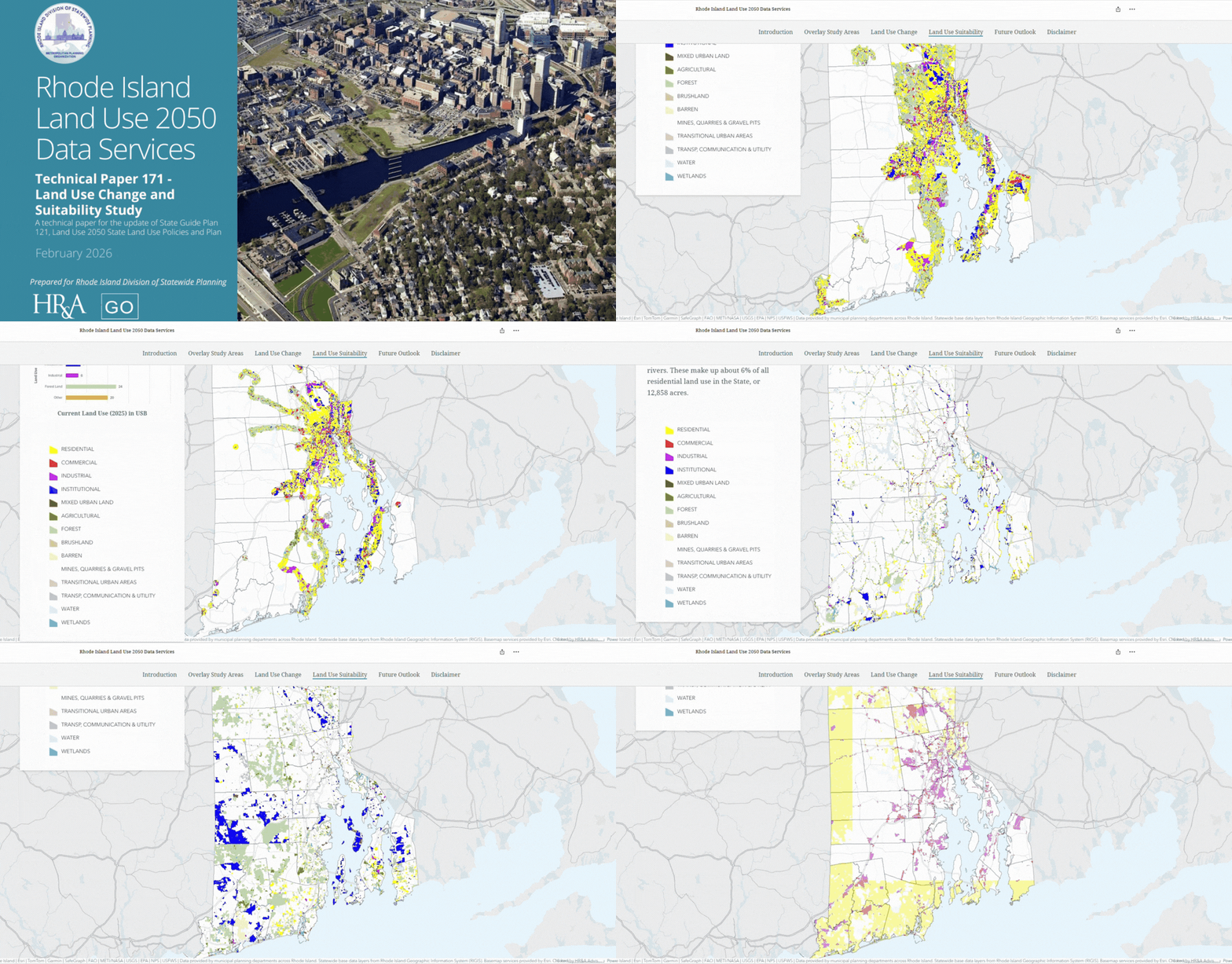
Between 2011 – 2020, the Rhode Island’s Urban Services Boundary experienced added over 2,500 acres of residential land, overlapping much of this growth within a ½ mile of public transit. However, conservation and agricultural lands have steadily declined under residential development pressure, with residential growth clustering near conservation areas, highlighting their amenity value as open space and recreation areas. Similarly, almost 420 acres of new residential land were built in 100-year flood zones – an ongoing conflict with Rhode Island’s climate resilience goals.
As Rhode Island prepares for its next land use plan and other policy and planning efforts, it can use opportunities for redevelopment and growth within the Urban Services Boundary and transit-accessible areas, while balancing alongside conservation of sensitive lands and mitigating risk in areas vulnerable to flooding and sea level rise. Some of the key land use suitability findings highlight the following:
- Future residential development should be concentrated in areas of the Urban Services Boundary with strong access to public transportation.
- Much of the rural land designated for residential use has not been developed, leaving opportunities for conservation and more efficient land use in the future
- Areas at risk for future flooding and sea level rise should not be developed, but can still support Rhode Island’s conservation efforts and growing blue economy industries.
- Commercial and industrial zoned areas often contain a variety of other uses, suggesting opportunities to create new mixed-use areas and enable infill development.
Our analysis sets the stage for the State to align on its policy and planning efforts related to housing affordability, economic development, transit accessibility, resiliency, and infrastructure priorities.
Interactive Story Map
To make the data and findings accessible, the project also includes an interactive StoryMap. This webtool allows users to explore land use patterns, data sources, and planning considerations in a visual, intuitive format — strengthening transparency and engagement across stakeholders.
All the data collected and generated under this effort is all publicly available for use by municipalities, state departments, other local and state agencies, as well as other stakeholders such as community groups and academics, supporting data transparency and collaborations across the state.
Together, these tools equip Rhode Island with a consistent, scalable framework to inform land use policy, infrastructure investment, and conservation strategy through 2050. By visualizing cities and towns as interconnected components of a single system, the State is positioning to plan for sustainable growth in a coordinated, data-driven way.
This milestone marks an important step toward ensuring that Rhode Island’s planning decisions are grounded in reliable data, aligned across jurisdictions, and responsive to long-term community needs.